
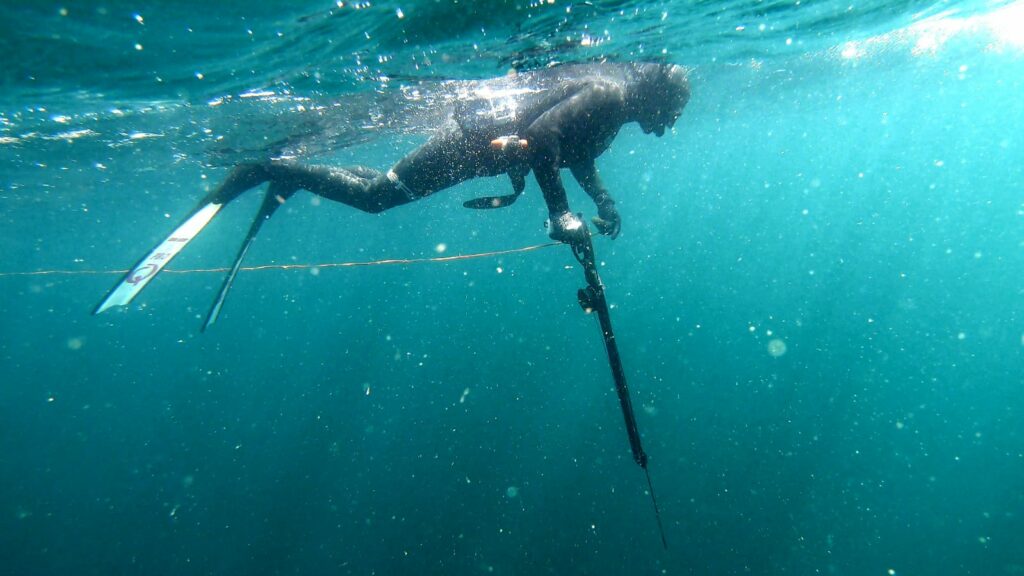

Key Points:
- Advanced Depth Training: Develop the techniques needed to spearfish effectively and safely in deeper water.
- Better Dive Efficiency: Improve duck dives, finning, equalisation, relaxation and bottom-time management.
- Advanced Hunting Techniques: Learn how fish behaviour and hunting strategies change as depth increases.
- Deep-Diving Safety: Build stronger buddy-diving, recovery and rescue procedures for deeper spearfishing.
- Real Ocean Training: Apply your skills in Cape Town’s natural spearfishing environment under the guidance of experienced instructors.
Introduction:
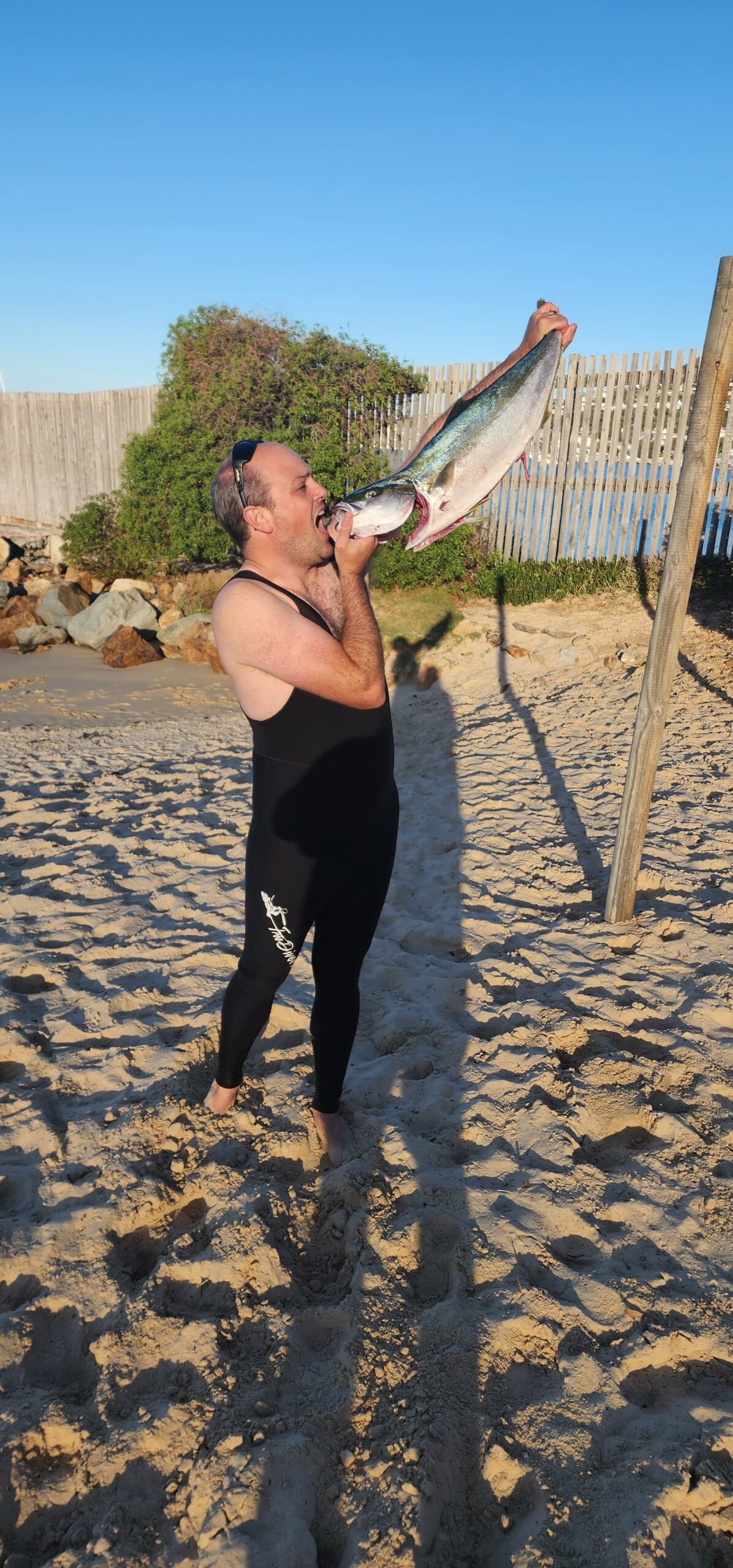
Once you have mastered the basics of spearfishing, depth changes everything. Diving deeper is not simply a matter of holding your breath for longer. As depth increases, equalisation becomes more demanding, descents become more physically and mentally challenging, surface recovery becomes increasingly important, and poor technique can quickly waste valuable oxygen.
At the same time, deeper reefs and offshore structures can give spearos access to completely different hunting environments and fish behaviour. The Deep Spearfishing Course offered by Cape Town Dive Centre is designed to help existing spearos progress beyond basic shore-diviving techniques and develop the skills required to hunt effectively in deeper water. Rather than simply trying to push divers deeper, the course focuses on becoming a more efficient, controlled and safer spearo at depth.
Course Overview:
The Deep Spearfishing Course builds on existing freediving and spearfishing skills. Participants learn how to plan and execute deeper spearfishing dives while conserving oxygen, maintaining good technique and working effectively with a dive buddy.
Training focuses on the complete dive cycle:
- Preparing for the dive at the surface.
- Executing an efficient duck dive.
- Descending with minimal unnecessary effort.
- Equalising efficiently as pressure increases.
- Approaching and hunting fish at depth.
- Managing bottom time.
- Beginning the ascent at the correct moment.
- Maintaining good technique during the ascent.
- Completing an effective surface recovery.
- Providing proper buddy support throughout the dive.
The objective is not simply to achieve a particular depth. It is to make deeper diving feel calmer, more controlled and more repeatable.
Transition to Open Water:
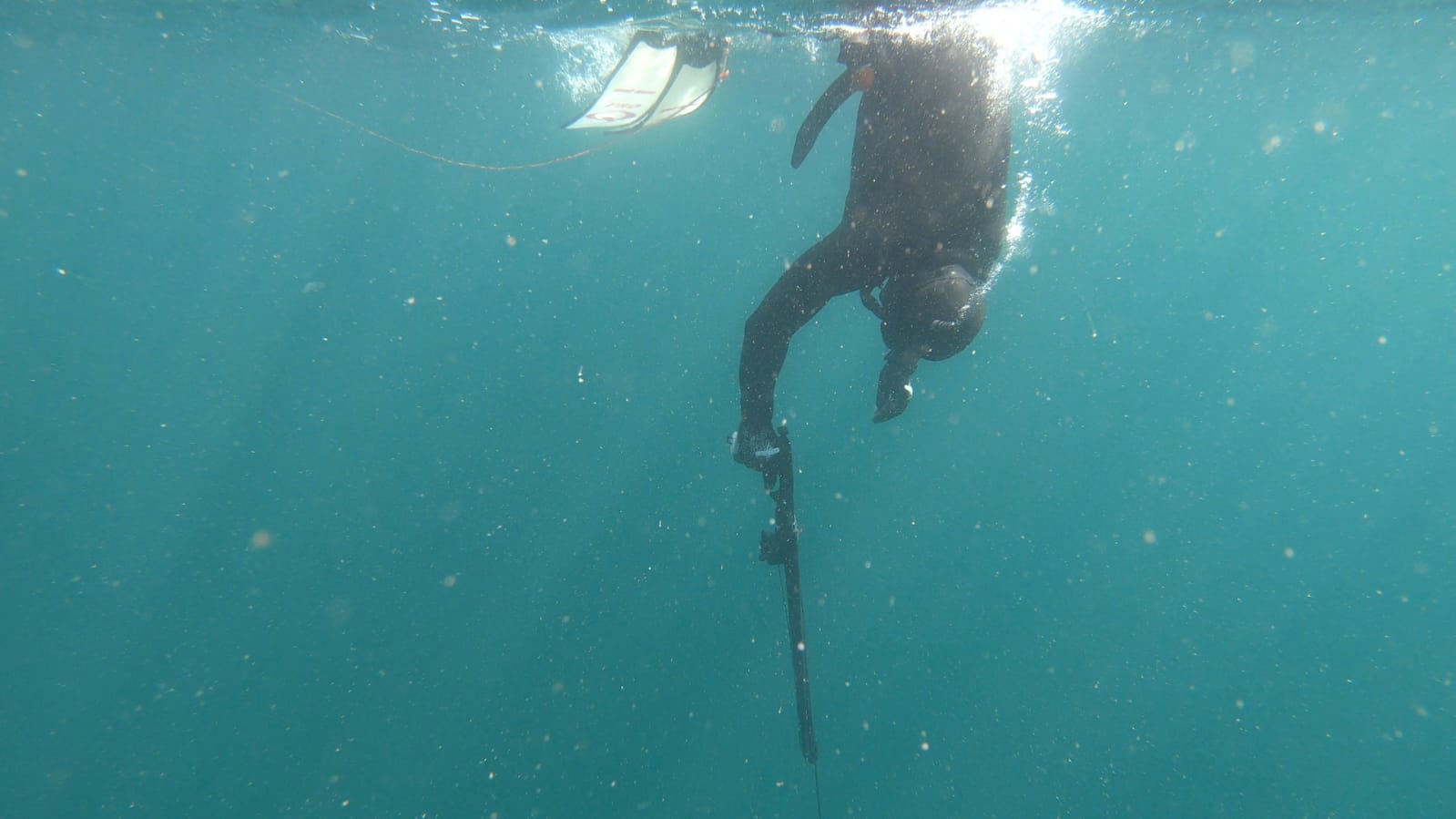
Spearfishing at greater depth requires a different approach from hunting in shallow kelp forests and reefs. A diver who is comfortable hunting at relatively shallow depths may discover that the same techniques become inefficient when the reef lies considerably deeper. Small mistakes begin to matter. Poor body position creates unnecessary drag. Excessive finning wastes oxygen. Difficulty equalising can interrupt the descent. Spending too long searching for fish on the bottom can leave insufficient reserve for the ascent. During the Deep Spearfishing Course, participants learn how to manage these challenges systematically.
Equalisation at Depth
Equalisation is one of the most common factors limiting progression into deeper water. As depth increases, the intervals between equalisation become shorter and techniques that worked comfortably in shallow water may become increasingly difficult. Deep spearfishing therefore requires equalisation to become automatic and efficient. The course works on improving equalisation technique and helping divers recognise problems before they become a barrier to further progression. The emphasis remains on comfortable, controlled progression rather than forcing depth.
Bottom Time and Dive Planning
Successful deep spearfishing requires discipline. Reaching the reef is only part of the dive. The spearo still needs enough time to locate a fish, position correctly, take an ethical shot and return safely to the surface. Participants therefore learn to think about every deep dive as a planned sequence rather than simply descending and seeing what happens.
Factors considered include:
- Target depth.
- Expected descent time.
- Hunting time.
- Ascent time.
- Current and surface conditions.
- Fish behaviour.
- Recovery between dives.
- Buddy positioning.
This becomes increasingly important when hunting fish that require patience once the diver reaches the bottom.
Advanced Deep-Water Spearfishing Techniques
Deeper hunting often rewards a different style of spearfishing.
Instead of continuously swimming across a reef looking for fish, the spearo may need to descend to a productive area, settle calmly and allow fish to approach.
Aspetto — The Ambush
Aspetto is one of the most important techniques in deeper-water spearfishing.
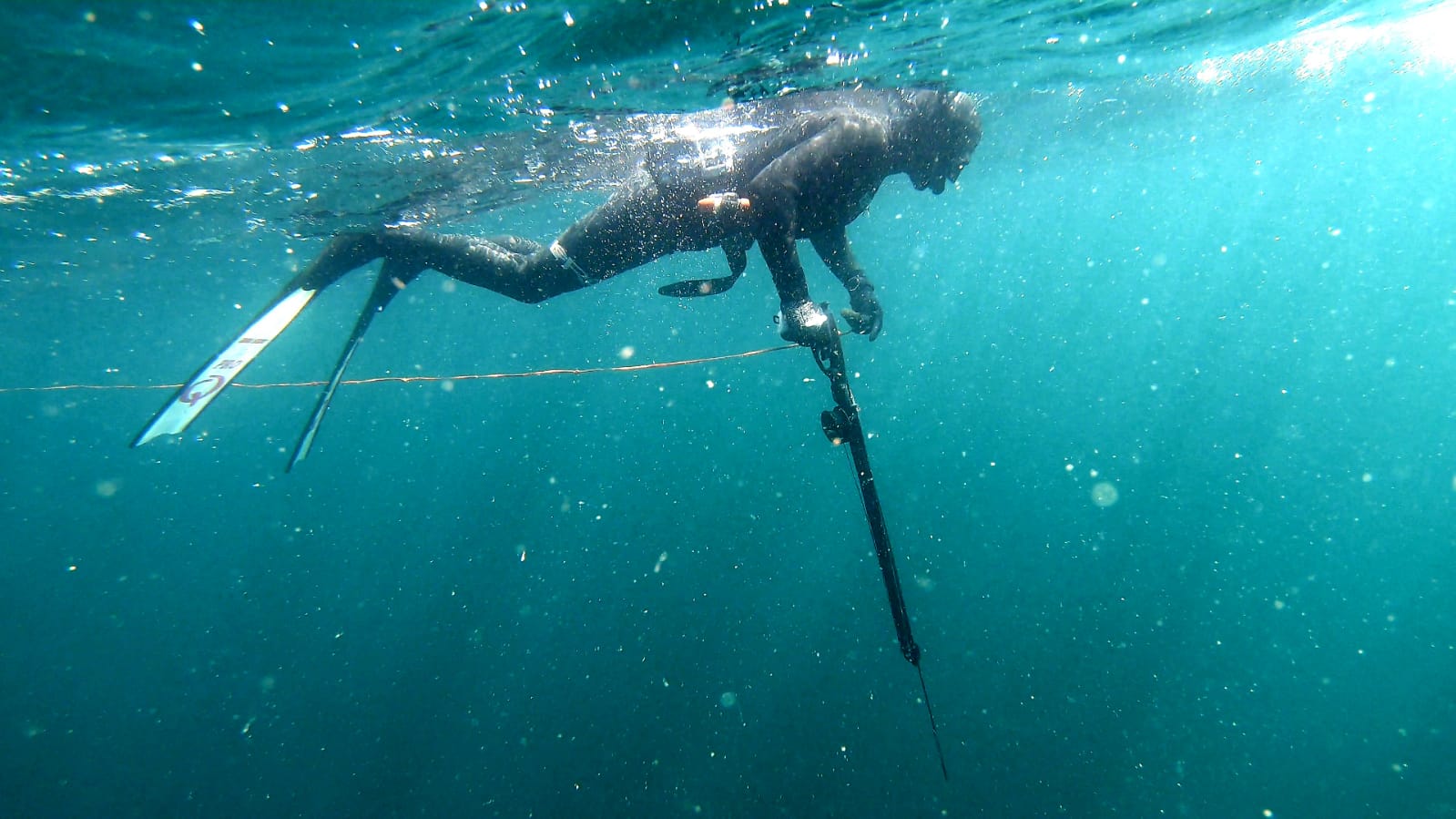
The diver descends to the reef, positions themselves quietly and waits.
Curious fish may gradually approach to investigate.
Successful aspetto depends on:
- Remaining relaxed.
- Minimising unnecessary movement.
- Choosing the correct position on the reef.
- Understanding how fish respond to the diver.
- Keeping the speargun positioned without excessive movement.
- Having the discipline to abandon the dive when it is time to ascend.
The technique can be extremely effective but becomes progressively more demanding as the hunting depth increases.
Using Reef Structure
Deep reefs are rarely featureless. Rocky ledges, drop-offs, gullies, caves, pinnacles and changes in reef structure can concentrate fish. Learning to identify these areas can dramatically improve hunting efficiency. Instead of spending valuable bottom time searching randomly, experienced spearos learn to recognise where fish are most likely to hold. This is particularly important during deeper dives where every second spent on the bottom has a cost.
Approaching Fish at Depth
Fish behaviour can change depending on depth, visibility, fishing pressure and the structure of the reef. Some fish respond to curiosity. Others immediately retreat when approached directly. Participants learn to adjust their approach by using terrain, remaining low against the reef, limiting eye contact and avoiding sudden movements. Good deep spearfishing is often less about chasing fish and more about creating an opportunity for the fish to come within range.
Local Marine Life and Deep Spearfishing
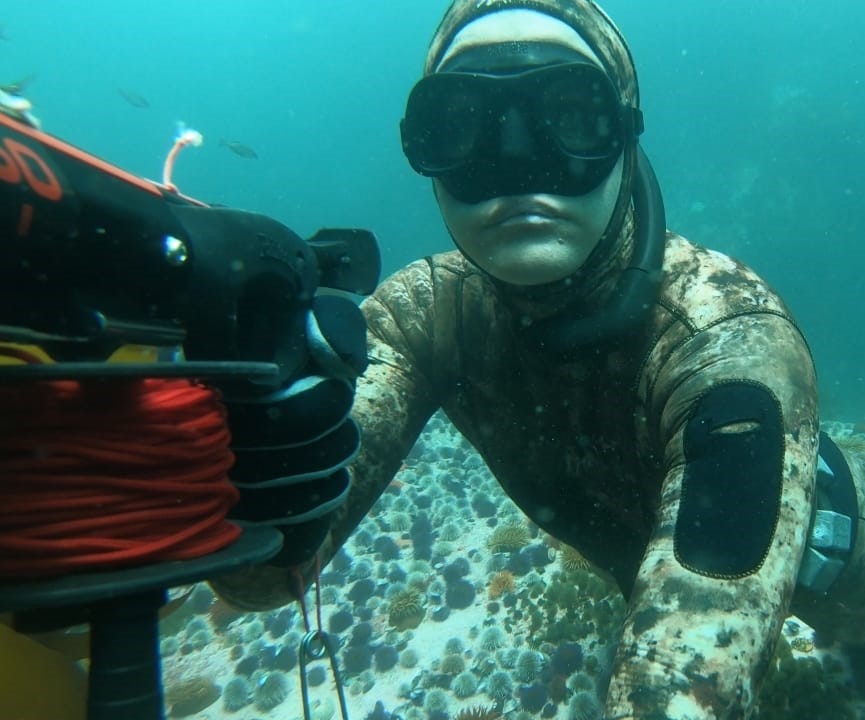
Cape Town offers a remarkably varied underwater environment, ranging from dense Atlantic kelp forests to deeper reefs and offshore hunting areas.
Different species require different approaches.
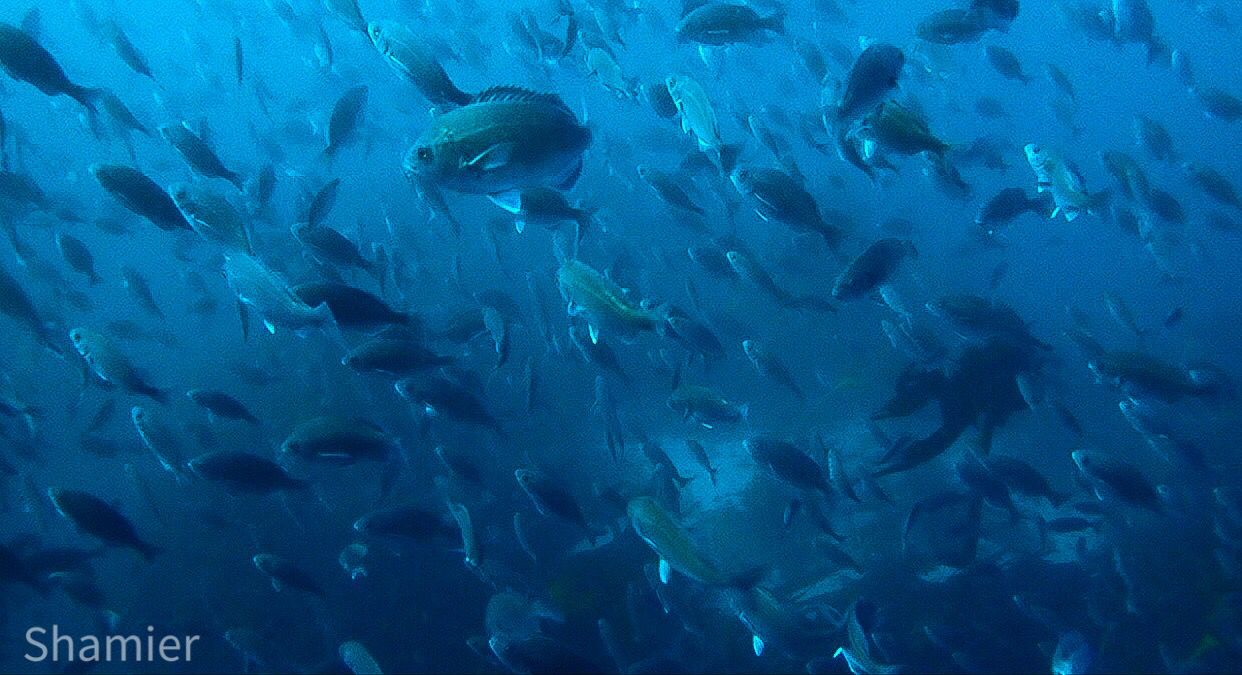
Yellowtail
Yellowtail are one of the most exciting fish encountered by Cape spearos. Unlike reef fish that remain associated with a particular piece of structure, yellowtail are powerful, fast-moving fish that may appear suddenly and disappear just as quickly. Successful hunting requires good positioning, controlled movement and an understanding of how the school is behaving. Deeper-water training can help spearos become more comfortable positioning themselves in the water column while remaining prepared for a brief shooting opportunity.

Red Roman
Red Roman are strongly associated with rocky reef habitat and are often encountered around reef structure. They reward patient hunting rather than aggressive pursuit. A spearo may descend onto suitable structure, remain still and allow a fish to move into range. Because reef species can be highly resident, responsible and selective hunting is particularly important.

Cape Bream / Hottentot
Hottentot are common around rocky reefs and kelp systems and provide an excellent opportunity to develop deeper reef-hunting techniques. While smaller fish may be encountered relatively shallow, larger individuals can also be found on deeper reef systems. Hunting them effectively requires quiet movement, good positioning and accurate shot placement. Throughout the course, divers are encouraged to identify fish correctly and remain familiar with current South African recreational fishing regulations, minimum sizes, closed seasons and bag limits before taking a fish.
Deep Spearfishing Safety
Depth should never be treated as a competition.
One of the most important objectives of the Deep Spearfishing Course is developing a disciplined approach to deeper diving.
As dive depth and duration increase, proper buddy diving becomes progressively more important.
Participants develop their understanding of:
- Surface supervision.
- One-up, one-down buddy procedures.
- Positioning during a buddy’s ascent.
- Recognising signs of hypoxia.
- Freediving rescue techniques.
- Appropriate surface recovery.
- Rest intervals between dives.
- Knowing when to terminate a dive.
- Recognising when conditions are unsuitable for deeper diving.
The safest deep spearo is not necessarily the person capable of reaching the greatest depth. It is the diver who understands their limits and consistently makes good decisions.
Course Requirements
The Deep Spearfishing Course is intended for divers who already have some experience in freediving and spearfishing.
Unlike our Shoredive Spearfishing Course, this course is not intended as a first introduction to spearfishing.
Participants should already be reasonably comfortable:
- Diving in the ocean.
- Using a mask, snorkel and long fins.
- Equalising during a descent.
- Performing a basic duck dive.
- Handling a speargun safely.
- Practising basic buddy-diving procedures.
The course then develops these foundations into the skills required for more demanding and deeper spearfishing.
Comprehensive Course Outcomes
Upon completion, participants should have a much stronger understanding of how to approach deeper spearfishing safely and efficiently.
Training aims to improve:
- Diving efficiency.
- Relaxation at depth.
- Equalisation.
- Duck-diving technique.
- Finning technique.
- Bottom-time management.
- Deep-water hunting techniques.
- Fish approach and ambush strategies.
- Dive planning.
- Buddy procedures.
- Surface recovery.
- Freediving safety and rescue awareness.
Most importantly, participants should leave the course understanding that progressing deeper is about technique and control before depth.
What Is Included
The Deep Spearfishing Course combines instruction with practical ocean training, allowing participants to apply techniques in genuine Cape Town spearfishing conditions.
Course components include:
- Advanced spearfishing instruction.
- Deep-diving technique development.
- Equalisation coaching.
- Advanced hunting techniques.
- Buddy-diving and safety training.
- Practical open-water sessions.
- Local fish identification and hunting strategies.
- Guidance on equipment configuration for deeper diving.
Where required, suitable spearfishing and freediving equipment can also be incorporated into the training.
Conclusion
Deep spearfishing opens an entirely new dimension of the sport. It provides access to different reefs, different hunting techniques and different fish — but it also places considerably greater demands on the diver. The solution is not simply to hold your breath longer or force yourself deeper. Effective deep spearfishing comes from combining relaxation, efficient technique, good equalisation, intelligent hunting and disciplined safety procedures.
The Cape Town Dive Centre Deep Spearfishing Course is designed to develop exactly these skills. Whether your goal is to become more comfortable hunting deeper reefs, improve your bottom time or develop the skills needed for more advanced spearfishing, the course provides a structured progression from recreational shore spearfishing into more demanding deeper-water diving.
Ready to take your spearfishing deeper?
View the Deep Spearfishing Course and book your training in Cape Town.
