
Key Summary
- Choosing the right spearfishing wetsuit depends on water temperature, diving conditions, fit and the activities you enjoy.
- A 5 mm wetsuit is a practical starting point for many Cape Town freedivers and spearfishers.
- Open-cell and double-nylon wetsuits offer different advantages in warmth, durability and convenience.
- A well-fitted wetsuit usually performs better than a poorly fitted suit with more expensive materials.
- Custom wetsuits can help divers whose body proportions do not match standard sizing.
- Lizzard offers wetsuit options through Cape Town Dive Centre, allowing divers to choose equipment for their needs.
Choosing a Spearfishing Wetsuit in South Africa
Choosing a spearfishing wetsuit in South Africa involves more than finding the correct size or colour. Our coastline includes warm subtropical waters, cold Atlantic conditions and a wide variety of diving environments.
Consequently, a wetsuit that works comfortably in KwaZulu-Natal may be unsuitable for a long dive in Cape Town.
The same applies to freediving. Pool training, depth training, shore diving and spearfishing all place different demands on your equipment.
The right wetsuit should provide suitable insulation, allow comfortable movement and withstand the conditions you regularly encounter.
At Cape Town Dive Centre (CTDC), we focus on helping divers make those choices based on their actual diving requirements.
Start With Your Diving Environment
Before comparing wetsuit brands, consider where you intend to dive.
Cape Town’s Atlantic Seaboard
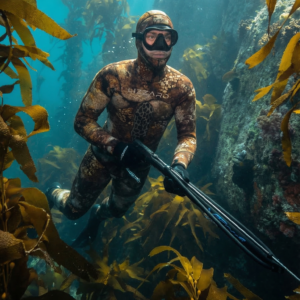
The Atlantic Seaboard is known for cold water, rocky shore entries and extensive kelp forests.
During summer, strong south-easterly winds can cause upwelling, bringing colder water to the surface.
These conditions sometimes coincide with improved visibility. However, clear water does not necessarily mean comfortable temperatures.
Therefore, insulation becomes particularly important during longer spearfishing sessions.
A well-fitted 5 mm wetsuit is a useful starting point for many local divers.
Some particularly cold conditions may require additional thermal protection.
False Bay
False Bay can offer warmer conditions, although temperatures vary across the bay.
The western coastline often benefits from winter westerly and north-westerly winds. Meanwhile, conditions on the eastern side respond differently to prevailing winds and swell.
As a result, there is no single forecast that applies to every False Bay dive site.
Divers should assess the specific location before deciding what to wear.
A 5 mm suit remains a versatile option, particularly for longer sessions.

Other South African Coastlines
Divers travelling to warmer parts of South Africa may prefer thinner wetsuits.
For example, a 3 mm wetsuit can be suitable for warmer water and shorter sessions.
Nevertheless, local temperature, exposure time and personal cold tolerance remain more important than the season alone.
Choosing Between a 3 mm and 5 mm Wetsuit
Thickness directly affects insulation, flexibility and buoyancy.
A 5 mm spearfishing wetsuit generally offers more thermal protection than a comparable 3 mm suit.
This makes it particularly useful for colder water and extended diving sessions.
However, thicker neoprene also adds buoyancy near the surface and can affect movement.
A 3 mm wetsuit uses less material and generally feels lighter.
It may suit warmer environments or shorter dives where maximum insulation is unnecessary.
Which Thickness Works Best in Cape Town?
For many divers, 5 mm represents a sensible starting point.
This provides useful versatility across Atlantic and False Bay conditions.
However, some divers prefer thicker suits in very cold water, while others tolerate thinner suits during warmer periods.
The best choice depends on several factors:
- Water temperature.
- Length of the dive session.
- Individual sensitivity to cold.
- Surface conditions and wind exposure.
- Wetsuit construction and fit.
Remember that neoprene compresses as you descend. This changes both insulation and buoyancy.
Therefore, your weighting must suit the wetsuit and the diving conditions.
Never add excessive weight simply to overcome the buoyancy of a thicker suit.
Open-Cell vs Double-Nylon Wetsuits
The interior construction is another important consideration.
Open-Cell Wetsuits
An open-cell wetsuit has unlined neoprene against the skin.
This creates close contact and can help reduce water flushing when the suit fits properly.
As a result, open-cell suits are particularly popular for cold-water freediving and spearfishing.
However, the interior is relatively delicate.
It also grips the skin, meaning a suitable lubricant is normally required for dressing.
Double-Nylon Wetsuits
A double-nylon wetsuit has fabric bonded to both sides of the neoprene.
The interior lining generally makes dressing easier and reduces the need for lubricant.
Additionally, the fabric provides protection against certain types of handling damage.
This can make a double-nylon suit attractive to recreational divers or those who frequently change at rocky dive sites.
However, warmth and flexibility depend on the overall construction, neoprene and fit.
An open-cell suit is not automatically better in every situation.
Which Construction Should You Choose?
Choose an open-cell wetsuit when you prioritise insulation and close-fitting comfort in cold water.
Choose double nylon when convenience and resistance to everyday handling damage are more important.
For many Cape Town spearfishers, open-cell construction is appealing because of the cold conditions.
Nevertheless, either design can work when selected appropriately.
Freediving Wetsuits vs Spearfishing Wetsuits
Freediving and spearfishing share many equipment requirements.
Both activities benefit from comfortable, flexible neoprene and appropriate thermal protection.
However, the intended use can influence additional features.
Freediving Wetsuits
Freediving wetsuits often prioritise freedom of movement and a close fit.
Some specialist designs use smooth outer surfaces to reduce drag.
These may work well for training and depth diving, but certain outer finishes require careful handling.
Spearfishing Wetsuits
A spearfishing wetsuit frequently includes additional protection in areas exposed to wear.
Depending on the model, features may include a chest loading pad or reinforced knees.
Camouflage finishes are also common.
However, camouflage is not essential for every spearfisher, and its effectiveness depends on the environment.
For Cape Town’s kelp forests and rocky reefs, flexibility, insulation and practical durability usually deserve greater attention.
A suitable spearfishing wetsuit can also work very well for recreational freediving.
Why Wetsuit Fit Matters More Than Many Divers Realise
Even excellent neoprene cannot compensate for a poorly fitted wetsuit.
If the suit is too loose, water may circulate around the torso, lower back and limbs.
This can reduce thermal comfort.
If the suit is too tight, it may restrict breathing, shoulder movement or normal circulation.
Neither situation is desirable.
A correctly fitted wetsuit should sit close to the skin without excessive tension.
Check These Areas
Shoulders: Raise both arms comfortably without severe pulling.
Chest: Breathe normally and check that the neoprene does not create uncomfortable compression.
Lower back: Look for large gaps or folds that could encourage water movement.
Hips and knees: Ensure the suit allows natural bending and finning.
Wrists and ankles: Check that the openings sit comfortably without unnecessary gaps.
Additionally, pay attention to the fit around the hood and neck.
A snug seal is useful, but it must not place uncomfortable pressure on the throat.
When Should You Consider a Custom Wetsuit?
A custom wetsuit may be worth considering when standard sizing does not accommodate your body proportions.
For example, some divers have broad shoulders and a narrow waist. Others require different leg, torso or arm lengths.
A standard-size wetsuit may fit one area correctly while creating problems elsewhere.
Custom sizing can address these differences, depending on the manufacturer’s available adjustments.
However, custom-made does not automatically mean better.
Accurate measurements, suitable materials and good construction remain essential.
Furthermore, a custom wetsuit should accommodate your actual diving posture and movement.
If you’re considering custom sizing, establish which measurements and modifications the supplier offers before ordering.
Choosing a Wetsuit for Kelp Forest Spearfishing
Kelp diving introduces several practical challenges.
You may need to swim through dense kelp, move around rocky reefs and manage your equipment in limited visibility.
Your wetsuit should allow comfortable finning and shoulder movement.
It should also withstand the normal demands of your entry and exit routine.
Nevertheless, avoid deliberately dragging neoprene across rocks.
Even reinforced wetsuits can be damaged by sharp surfaces.
Also remember that the ocean environment changes quickly.
Always check swell, currents, access conditions and weather before entering the water.
Spearfishing requires appropriate permits and compliance with local marine protected area rules.
Only hunt where spearfishing is permitted, and observe applicable species restrictions.

The Lizzard Wetsuit Range at Cape Town Dive Centre
Cape Town Dive Centre offers Lizzard wetsuits for freediving and spearfishing.
The range provides options in thickness, construction and appearance, allowing divers to select a suit for different needs.
For Cape Town’s colder waters, we generally suggest starting the selection process with a 5 mm suit.
However, the right choice still depends on how and where you dive.
Open-cell options appeal to divers prioritising thermal comfort, while double-nylon options offer a different balance of practicality and durability.
Where customisation is available, it may help accommodate individual fitting requirements.
Rather than choosing solely by camouflage pattern or appearance, compare the actual specifications of each model.
In particular, check the available sizing, construction, lining and reinforcement features.
You can view the available options in our freediving and spearfishing wetsuit category.
Other Equipment to Consider
Your wetsuit forms only one part of your diving equipment.
A suitable low-volume mask, snorkel, fins and weight system are also important.
For spearfishing, use a highly visible float and appropriate float line where required or recommended.
Your weighting should account for the thickness and buoyancy of your wetsuit.
Furthermore, changing wetsuits may require a reassessment of your weights.
Most importantly, never freedive or spearfish alone.
Dive with a competent buddy who understands breath-hold diving rescue procedures.
Conclusion
Choosing the right spearfishing wetsuit or freediving wetsuit starts with understanding your environment.
Cape Town’s colder water makes insulation a priority. However, flexibility, durability and fit remain equally important.
A 5 mm wetsuit is a practical starting point for many local divers, particularly those diving regularly in kelp forests and rocky reef environments.
Open-cell and double-nylon constructions each offer advantages.
Meanwhile, a custom wetsuit may provide a better solution when standard sizing does not fit correctly.
At Cape Town Dive Centre, we offer Lizzard wetsuit options for different diving requirements.
If you’re unsure which suit is appropriate, compare the available models and choose according to your diving conditions, fit and intended use.
